

Prototype Manufacturing Cost Analysis: Key Cost Drivers, Process Comparison, and Cost Reduction Strategies
Introduction
Prototype manufacturing plays a critical role in modern product development. Before a product enters mass production, prototypes allow engineers, designers, and manufacturers to validate form, fit, function, and manufacturability while minimizing development risks. However, prototype costs can vary significantly depending on manufacturing methods, materials, design complexity, tolerance requirements, and production volume.
Understanding the factors that influence prototype manufacturing costs helps companies make informed decisions during the product development cycle. By selecting the appropriate manufacturing process and optimizing design parameters, businesses can reduce development expenses, accelerate time-to-market, and improve overall product quality.
This article provides a comprehensive analysis of prototype manufacturing costs, including cost structures, process comparisons, major cost drivers, and practical cost-reduction strategies.
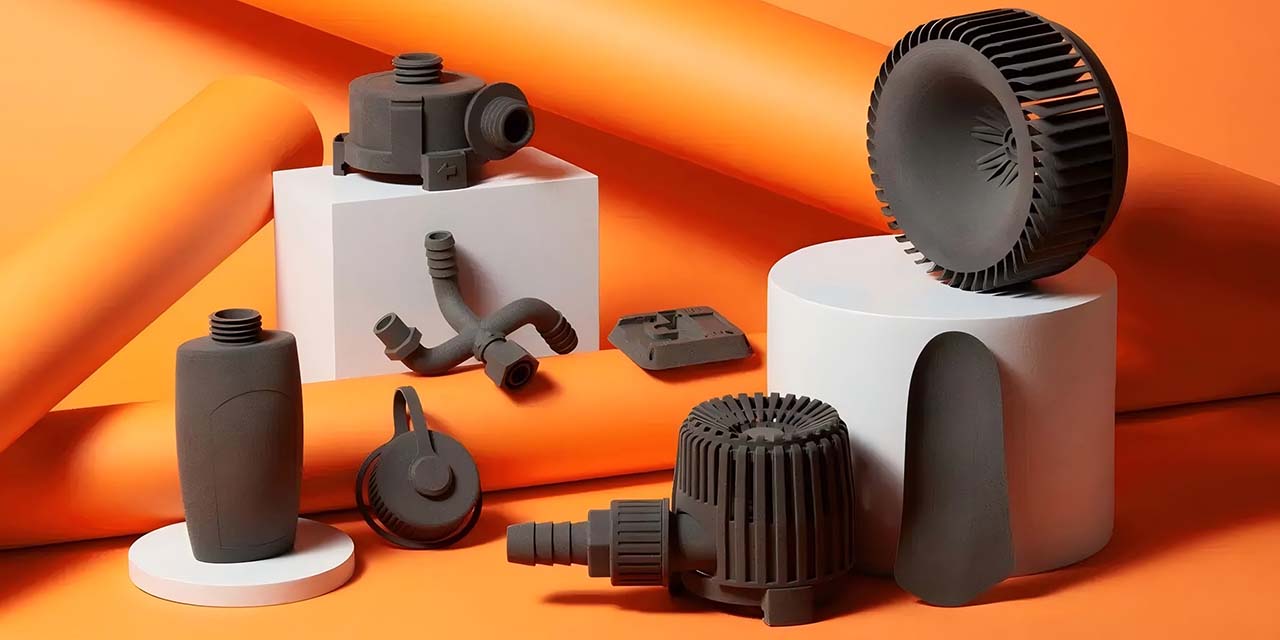
What Is Prototype Manufacturing?
Prototype manufacturing refers to the production of preliminary product samples used for design validation, engineering evaluation, testing, and market assessment before full-scale production.
Depending on the development stage, prototypes can be classified into several categories:
Concept Prototypes
Concept prototypes are primarily used to evaluate product appearance, ergonomics, and overall design intent. These prototypes are often produced using rapid prototyping technologies such as SLA or FDM 3D printing.
Engineering Prototypes
Engineering prototypes are used to test functionality, mechanical performance, and assembly compatibility. CNC machining is commonly employed because it provides production-grade materials and high dimensional accuracy.
Pilot Production Prototypes
Pilot prototypes bridge the gap between development and mass production. They are typically manufactured using soft tooling, vacuum casting, or low-volume injection molding.
Pre-Production Samples
Pre-production prototypes are intended to validate manufacturing processes, quality standards, and supply chain readiness before commercial launch.
Understanding the Cost Structure of Prototype Manufacturing
The total cost of prototype manufacturing can generally be divided into six major components:
1. Design and Engineering Costs
Design-related expenses include:
- CAD modeling
- Product design revisions
- DFM (Design for Manufacturability) analysis
- CAM programming
- Manufacturing process planning
Complex products often require multiple design iterations before reaching a manufacturable configuration. As a result, engineering costs can represent a significant portion of the overall prototype budget.
For highly complex parts, engineering and preparation costs may account for 10% to 30% of total project costs.
2. Material Costs
Material selection directly impacts manufacturing expenses.
Common prototype materials include:
Plastics
- PLA
- ABS
- Nylon
- Polycarbonate (PC)
- PEEK
Metals
- Aluminum 6061
- Aluminum 7075
- Stainless Steel 304
- Stainless Steel 316
- Titanium Ti-6Al-4V
Although additive manufacturing often achieves higher material utilization rates than subtractive manufacturing, specialized printing materials can be significantly more expensive than standard industrial materials.
Material costs become increasingly important when producing large prototypes or multiple iterations.
3. Machine Operating Costs
Machine costs include:
- Equipment depreciation
- Electricity consumption
- Preventive maintenance
- Facility overhead
- Machine utilization rates
Different manufacturing technologies have vastly different hourly operating costs.
For example:
- Desktop FDM printers have relatively low operating costs.
- Industrial SLA and SLS systems require higher capital investment.
- Five-axis CNC machining centers often have the highest hourly costs due to equipment complexity and maintenance requirements.
Machine utilization rates significantly affect overall production economics.
4. Labor Costs
Labor remains a major cost factor in prototype manufacturing.
Typical labor activities include:
- CAD design
- CNC programming
- Machine setup
- Part inspection
- Assembly
- Post-processing
In low-volume production environments, machine setup and programming time can account for a substantial percentage of total manufacturing costs.
Unlike mass production, prototype manufacturing often requires skilled technicians and engineers rather than automated production systems.
5. Tooling Costs
Tooling costs vary significantly depending on the manufacturing method.
Additive Manufacturing
Most 3D printing technologies require little or no tooling investment.
CNC Machining
Tooling costs are relatively low and primarily involve cutting tools, fixtures, and workholding systems.
Injection Molding
Tooling costs are typically the largest expense.
Typical mold costs include:
- 3D Printed Soft Tooling: $100–$500
- Aluminum Molds: $1,000–$10,000
- Production Steel Molds: $10,000–$100,000+
Because tooling expenses are fixed costs, production volume greatly influences their impact on unit cost.
6. Post-Processing Costs
Post-processing requirements can substantially increase manufacturing expenses.
Common post-processing operations include:
- Sanding
- Polishing
- Bead blasting
- Painting
- Anodizing
- Powder coating
- Heat treatment
- Surface texturing
For appearance-critical prototypes, post-processing costs may exceed the actual manufacturing cost of the part itself.
Cost Comparison of Different Prototype Manufacturing Methods
Selecting the appropriate manufacturing process is one of the most important factors affecting prototype costs.
1. 3D Printing
Advantages
- No tooling required
- Fast turnaround
- High design freedom
- Ideal for complex geometries
Limitations
- Higher unit costs for larger quantities
- Limited material selection
- Surface finish may require additional processing
Best Production Volume
1–50 units
Typical Applications
- Concept models
- Functional prototypes
- Medical devices
- Consumer product development
For low-volume production, additive manufacturing often provides the most economical solution because of its minimal setup requirements.
2. CNC Machining
Advantages
- Excellent dimensional accuracy
- Production-grade materials
- Superior mechanical properties
- Tight tolerances
Limitations
- Material waste
- Longer setup times
- Increased costs for complex geometries
Best Production Volume
1–500 units
Typical Applications
- Engineering validation
- Functional testing
- Aerospace components
- Automotive prototypes
CNC machining remains the preferred option when prototypes must closely replicate final production parts.
3. Injection Molding
Advantages
- Extremely low unit cost
- High repeatability
- Production-quality parts
- Excellent surface finish
Limitations
- High tooling investment
- Longer lead times
- Less suitable for frequent design changes
Best Production Volume
500+ units
Typical Applications
- Pilot production
- Market testing
- Bridge production
- Mass production preparation
Although tooling costs are substantial, injection molding becomes increasingly cost-effective as production volume rises.
Break-Even Analysis: When Should You Switch Manufacturing Processes?
Prototype manufacturing economics are heavily influenced by production volume.
Different manufacturing technologies have distinct cost structures:
3D Printing
- Low fixed costs
- High variable costs
Injection Molding
- High fixed costs
- Low variable costs
As production volume increases, the unit cost of injection molding decreases rapidly because tooling costs are distributed across a larger number of parts.
In many applications:
- 1–20 parts → 3D Printing is most economical.
- 20–300 parts → CNC Machining becomes competitive.
- 500+ parts → Injection Molding often delivers the lowest unit cost.
The exact break-even point depends on part geometry, material selection, and tooling requirements.
Five Critical Factors That Drive Prototype Manufacturing Costs
1. Part Complexity
Complex geometries increase manufacturing difficulty.
Examples include:
- Deep cavities
- Undercuts
- Thin walls
- Organic surfaces
- Internal channels
Traditional machining costs often rise dramatically with increasing complexity.
In contrast, additive manufacturing is generally less sensitive to geometric complexity.
2. Tolerance Requirements
Tighter tolerances require:
- Additional machining operations
- Precision equipment
- More extensive quality control
Typical tolerance categories include:
| Tolerance Level | Cost Impact |
|---|---|
| ±0.5 mm | Low |
| ±0.1 mm | Moderate |
| ±0.05 mm | High |
| ±0.01 mm | Very High |
Designers should avoid unnecessarily tight tolerances whenever possible.
3. Material Selection
Different materials vary significantly in:
- Raw material cost
- Machinability
- Printing difficulty
- Surface treatment requirements
For example, titanium is substantially more expensive to machine than aluminum due to slower cutting speeds and increased tool wear.
Material selection should balance performance requirements and manufacturing costs.
4. Production Quantity
Quantity has a direct impact on unit economics.
As production volume increases:
- Fixed costs are distributed across more parts.
- Unit costs decrease.
- Manufacturing methods become more scalable.
Production quantity is often the primary factor used to determine the optimal manufacturing process.
5. Lead Time Requirements
Fast-track projects often incur premium charges.
Expedited manufacturing may require:
- Priority scheduling
- Overtime labor
- Additional quality inspections
- Premium shipping services
Rush orders can increase manufacturing costs by 20% to 100% depending on project complexity and delivery deadlines.
Strategies to Reduce Prototype Manufacturing Costs
Implement Design for Manufacturability (DFM)
DFM helps eliminate features that unnecessarily increase manufacturing costs.
Examples include:
- Reducing deep pockets
- Avoiding sharp internal corners
- Simplifying assemblies
- Standardizing wall thicknesses
Even minor design modifications can significantly reduce production expenses.
Use a Phased Validation Approach
An effective development strategy is:
Stage 1: Concept Validation
Use 3D printing for rapid iterations.
Stage 2: Functional Validation
Use CNC machining to evaluate performance.
Stage 3: Production Validation
Use soft tooling or low-volume injection molding.
This approach minimizes risk while controlling development costs.
Optimize Part Geometry
Cost-effective designs typically feature:
- Uniform wall thickness
- Simplified geometries
- Fewer components
- Standard hole sizes
- Reduced machining operations
Design simplification often provides the highest return on investment.
Select the Right Manufacturing Partner
An experienced manufacturing partner can provide:
- DFM recommendations
- Material guidance
- Process optimization
- Rapid quoting
- Quality assurance
Early supplier involvement often prevents costly redesigns later in the development cycle.
Conclusion
Prototype manufacturing costs are influenced by a combination of engineering effort, material selection, machine operation, labor requirements, tooling investment, and post-processing activities. There is no single manufacturing method that is optimal for every project.
For most product development programs:
- 3D printing is ideal for rapid iteration and early-stage validation.
- CNC machining is best for functional and engineering prototypes.
- Injection molding becomes the most cost-effective solution for larger production volumes.
By understanding the key cost drivers and selecting the most appropriate manufacturing process, companies can significantly reduce development expenses, accelerate product launch schedules, and improve overall product success.
In today’s competitive manufacturing environment, effective prototype cost management is not merely a budgeting exercise—it is a strategic advantage that directly impacts innovation, speed, and profitability.
Real-World Prototype Manufacturing Cost Examples
One of the most common questions product developers ask is:
“How much should a prototype actually cost?”
The answer depends on the manufacturing method, material, complexity, and quantity. The following examples illustrate how costs typically change across different prototyping scenarios.
Example 1: Consumer Electronics Housing
Project Specifications
- Material: ABS
- Size: 150 × 80 × 35 mm
- Surface Finish: Matte texture
- Quantity: 10 units
Option A: SLA 3D Printing
| Cost Item | Estimated Cost |
|---|---|
| Setup | $50 |
| Printing | $180 |
| Post-processing | $70 |
| Total | $300 |
Option B: CNC Machining
| Cost Item | Estimated Cost |
|---|---|
| Programming | $120 |
| Setup | $150 |
| Machining | $450 |
| Finishing | $80 |
| Total | $800 |
Option C: Injection Molding
| Cost Item | Estimated Cost |
|---|---|
| Aluminum Tooling | $2,500 |
| Production | $50 |
| Total | $2,550 |
For only 10 parts, SLA printing is the most economical solution because tooling costs are avoided entirely. Injection molding becomes prohibitively expensive due to mold investment. Research on prototype injection molding consistently shows that tooling costs dominate low-volume production economics.
Example 2: Automotive Functional Bracket
Project Specifications
- Material: Aluminum 6061
- Tolerance: ±0.05 mm
- Quantity: 50 units
CNC Machining
| Cost Component | Cost |
|---|---|
| CAM Programming | $200 |
| Setup | $300 |
| Machining | $2,500 |
| Inspection | $400 |
| Total | $3,400 |
Metal 3D Printing
| Cost Component | Cost |
|---|---|
| Build Preparation | $250 |
| Printing | $4,200 |
| Support Removal | $500 |
| Heat Treatment | $400 |
| Total | $5,350 |
In this case, CNC machining offers a lower total cost because the geometry is relatively simple and does not benefit significantly from additive manufacturing.
Example 3: Medical Device Enclosure
Project Specifications
- Material: PC-ABS
- Quantity: 1,000 units
CNC Machining
Estimated Total Cost:
$18,000–$25,000
Injection Molding
| Cost Item | Cost |
|---|---|
| Aluminum Mold | $5,000 |
| Production | $1,500 |
| Total | $6,500 |
At 1,000 units, injection molding becomes significantly more cost-effective because tooling costs can be amortized over a larger production volume. Industry studies and economic analyses consistently identify a break-even region where molding overtakes additive manufacturing and machining.
Industry-Specific Prototype Manufacturing Costs
Different industries have different prototype requirements, resulting in vastly different cost structures.
Aerospace Industry
Key Cost Drivers
- Tight tolerances
- High-performance alloys
- Traceability requirements
- Certification testing
Common materials include:
- Titanium Ti-6Al-4V
- Inconel 718
- Aluminum 7075
Aerospace prototypes often cost 2–5 times more than equivalent commercial products because of material certification and quality assurance requirements.
Medical Device Industry
Key Cost Drivers
- Biocompatible materials
- Sterilization validation
- Regulatory compliance
- Functional testing
Typical prototype budgets range from:
- Simple enclosure: $500–$3,000
- Surgical instrument: $2,000–$20,000
- Implantable device: $10,000+
Because design changes become increasingly expensive after regulatory submissions, extensive prototyping is common during development.
Automotive Industry
Key Cost Drivers
- Durability testing
- Mechanical validation
- Environmental testing
- Large component sizes
Automotive OEMs frequently combine:
- 3D printing for concept validation
- CNC machining for engineering verification
- Soft-tool injection molding for pilot production
This hybrid approach minimizes development risk while controlling costs.
Consumer Electronics Industry
Key Cost Drivers
- Appearance quality
- Surface finishing
- Assembly validation
- Rapid iteration cycles
Because product life cycles are short, manufacturers often prioritize speed over minimizing prototype cost.
For consumer electronics startups, rapid prototyping can significantly reduce time-to-market, which often outweighs higher prototype expenses.
Hidden Costs Often Ignored in Prototype Manufacturing
Many buyers focus exclusively on the quoted manufacturing price while overlooking secondary costs.
Design Revision Costs
Research shows that design changes become exponentially more expensive as products move closer to production. Early-stage prototyping helps identify issues before expensive tooling investments are made.
Common revision expenses include:
- CAD updates
- Re-programming
- New fixtures
- Additional testing
Logistics Costs
Prototype projects frequently involve:
- International shipping
- Customs duties
- Expedited freight
For urgent projects, logistics costs may represent 10%–20% of the total project budget.
Quality Inspection Costs
Complex prototypes often require:
- CMM inspection
- Material certification
- Functional testing
Inspection costs can become substantial when tight tolerances are required.
Opportunity Costs
A delayed prototype can postpone:
- Investor presentations
- Customer demonstrations
- Product launches
In many situations, faster delivery creates more value than a lower manufacturing price.
Prototype Manufacturing Cost Reduction Checklist
Before requesting a quotation, use the following checklist to reduce costs.
Design Optimization
✓ Minimize unnecessary features
✓ Reduce deep pockets
✓ Avoid sharp internal corners
✓ Standardize wall thickness
✓ Reduce part count
Material Optimization
✓ Use standard industrial materials
✓ Avoid exotic alloys unless required
✓ Match material performance to application
Tolerance Optimization
✓ Apply tight tolerances only where necessary
✓ Use general tolerances for non-critical dimensions
✓ Avoid over-engineering
Manufacturing Strategy
✓ Use 3D printing for early iterations
✓ Reserve CNC machining for functional testing
✓ Transition to molding only when design stabilizes
Supplier Collaboration
✓ Request DFM feedback
✓ Compare multiple manufacturing methods
✓ Engage suppliers early in development
Industry practitioners frequently report that DFM reviews identify costly features such as thin walls, deep cavities, and unnecessarily tight tolerances before production begins.
Frequently Asked Questions (FAQ)
How much does a prototype usually cost?
Simple plastic prototypes may cost less than $100, while highly engineered aerospace or medical prototypes can exceed $10,000. Cost depends on complexity, material, manufacturing process, and quantity.
Is CNC machining cheaper than 3D printing?
It depends on the geometry.
For simple parts, CNC machining is often more economical.
For highly complex geometries, additive manufacturing may provide significant cost advantages.
At what quantity does injection molding become cheaper?
Many industry analyses place the break-even range between approximately 200–1,000 units, depending on tooling cost, material, and part complexity.
What is the most affordable prototyping method?
For low-volume production, FDM and SLA 3D printing are usually the most affordable options because they eliminate tooling expenses.
How can I reduce prototype manufacturing costs?
The most effective methods include:
- Implementing DFM principles
- Simplifying geometry
- Selecting cost-effective materials
- Avoiding unnecessarily tight tolerances
- Choosing the appropriate manufacturing process
Future Trends in Prototype Manufacturing Economics
Several emerging technologies are reshaping prototype manufacturing costs.
AI-Assisted DFM Analysis
Artificial intelligence is increasingly being used to identify cost-driving features before production begins.
Benefits include:
- Faster quoting
- Improved manufacturability
- Reduced engineering effort
Additive Manufacturing as a Service (MaaS)
Cloud-based manufacturing networks allow companies to access distributed production capacity without investing in equipment.
Recent economic analyses suggest that localized on-demand manufacturing can reduce inventory costs while improving responsiveness.
Hybrid Manufacturing
Hybrid workflows combine:
- Additive manufacturing
- CNC machining
- Injection molding
This approach allows manufacturers to leverage the strengths of each process while minimizing overall costs.
Final Thoughts
Prototype manufacturing should not be viewed solely as a production expense. Instead, it is an investment in product validation, risk reduction, and faster commercialization.
The most successful companies focus on optimizing the entire development process rather than simply selecting the lowest-cost supplier. By understanding cost drivers, evaluating manufacturing alternatives, and implementing Design for Manufacturability principles, organizations can significantly reduce prototype expenses while accelerating innovation.
Ultimately, the lowest prototype cost is not always the best outcome. The optimal solution is the one that delivers the highest value by balancing cost, quality, speed, and production readiness.
References
- Hopkinson, N., & Dickens, P. (2003). Analysis of Rapid Manufacturing—Using Layer Manufacturing Processes for Production.
- Ruffo, M., Tuck, C., & Hague, R. (2006). Cost Estimation for Rapid Manufacturing: Laser Sintering Production for Low to Medium Volumes.
- Minguella-Canela, J., et al. (2019). Study and Comparison of Cost Structures Associated with 3D Printing, Injection Molding, and Machining Technologies.
- Ding, J., et al. (2021). The Economics of Additive Manufacturing: Towards a General Cost Model Including Process Failure.
- Rintala, A. (2025). Estimating the Economic Feasibility of Additive Manufacturing: A Systematic Literature Review.
- Patil, S., et al. (2021). Feasibility Analysis of Manufacturing Using Rapid Prototyping: A Review.
- Karunakaran, K.P., et al. (2008). Computer Aided Rapid Tooling Process Selection and Manufacturability Evaluation for Injection Mold Development.
