

Moving from Prototyping to Small-Batch Direct Manufacturing
A successful prototype proves that an idea can work. It does not automatically prove that the product can be manufactured repeatedly, economically, and at the required quality level.
This distinction has become increasingly important as companies shorten product development cycles, launch more customized products, and respond to uncertain market demand. Instead of moving directly from one prototype to expensive mass-production tooling, many manufacturers now adopt small-batch direct manufacturing as an intermediate—and sometimes long-term—production strategy.
Also described as low-volume manufacturing, bridge production, on-demand manufacturing, or direct digital manufacturing, this approach enables companies to produce market-ready parts in controlled quantities without immediately committing to high-volume tooling.
However, moving from prototyping to production is not simply a matter of ordering more parts. It requires a structured transition involving design stabilization, process selection, material qualification, inspection planning, traceability, and supply-chain preparation.
What Is Small-Batch Direct Manufacturing?
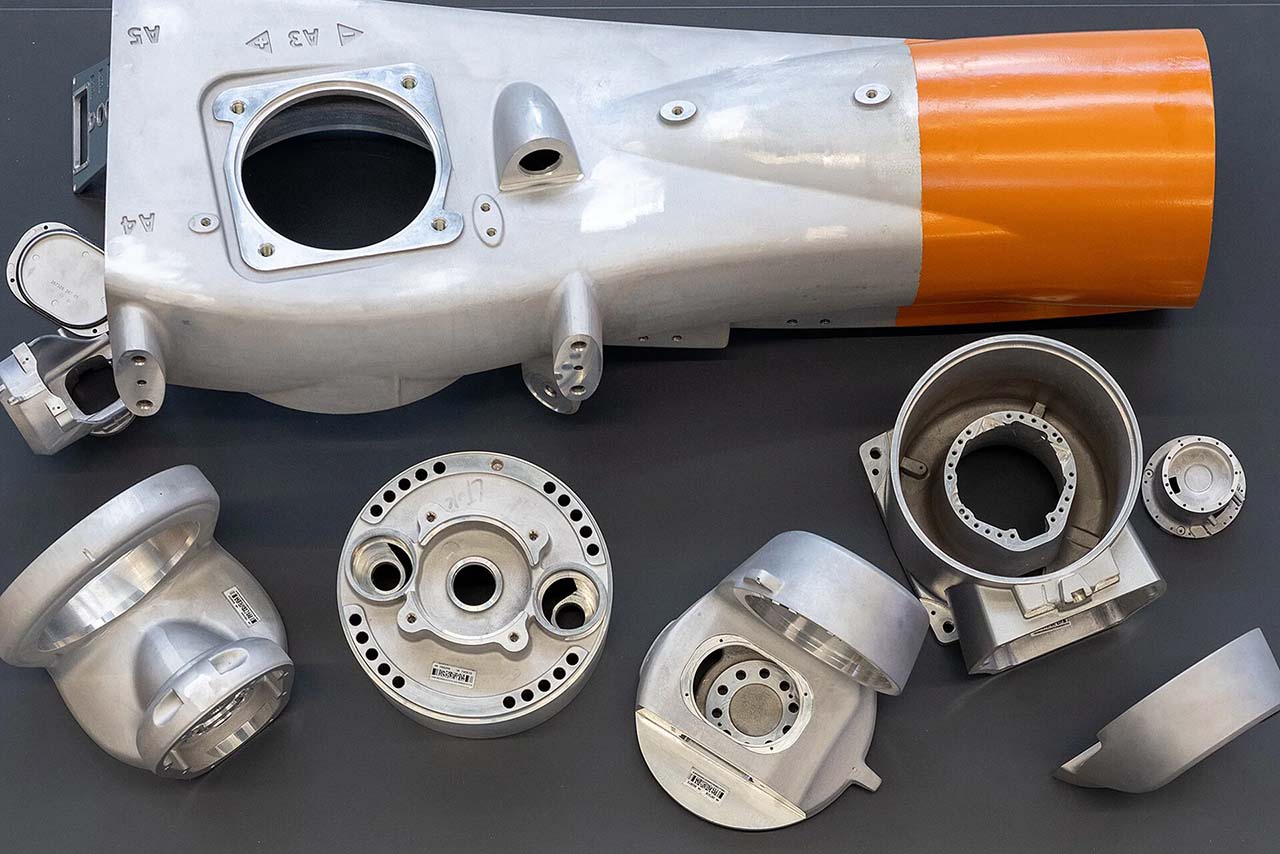
Small-batch direct manufacturing is the production of functional, saleable, or end-use components in relatively limited quantities using processes that require little or no dedicated hard tooling.
Depending on the product, these processes may include:
- CNC machining
- Metal or polymer additive manufacturing
- Rapid injection molding
- Vacuum casting and urethane casting
- Sheet metal fabrication
- Laser cutting and bending
- Die casting with simplified tooling
- Hybrid additive and subtractive manufacturing
The objective is not merely to create additional prototypes. The objective is to establish a repeatable production process capable of delivering consistent parts that meet defined engineering, quality, and regulatory requirements.
Research on additive manufacturing consistently identifies low-volume production, customized components, complex geometries, and rapid design modification as areas where additive processes can provide significant value. Conventional manufacturing, meanwhile, remains advantageous when production volume, material requirements, surface finish, or cycle-time economics justify dedicated tooling.
The best solution is therefore rarely “3D printing versus traditional manufacturing.” It is usually a carefully selected combination of CNC machining, additive manufacturing, molding, fabrication, and post-processing.
Why Companies Are Moving Beyond Traditional Prototype-to-Mass-Production Models
The traditional product launch model follows a relatively linear sequence:
Concept → Prototype → Testing → Tooling → Mass Production
This model works well when demand is predictable and the design is unlikely to change. It becomes risky when market conditions, technical requirements, or customer preferences are still evolving.
Small-batch production introduces a more flexible pathway:
Concept → Functional Prototype → Production-Intent Prototype → Small-Batch Manufacturing → Design Optimization → Scaled Production
This approach helps companies reduce several common launch risks.
1. Market Demand Can Be Validated Before Major Tooling Investment
A product may perform well technically but still fail commercially. Producing an initial batch allows a company to test pricing, distribution, customer acceptance, installation procedures, service requirements, and real-world product performance.
Instead of investing immediately in high-cavitation molds, automated assembly fixtures, or dedicated production lines, the manufacturer can collect market evidence before scaling.
2. Engineering Changes Remain More Affordable
Changes are relatively inexpensive when production depends primarily on digital CAD/CAM data and flexible fixtures. They become significantly more expensive after hardened tooling, automated equipment, supplier contracts, and large material inventories have been established.
Direct digital manufacturing can therefore support faster design revisions and greater product customization because production data can flow directly from engineering into manufacturing systems. NIST describes the digital thread as a connected flow of product information across design, manufacturing, inspection, and product support, helping shorten the design-to-production timeline while improving information reuse and traceability.
3. Supply-Chain Exposure Can Be Reduced
Small-batch and on-demand manufacturing can reduce dependence on large finished-goods inventories and long replenishment cycles. It can also make regional or distributed production more practical.
NIST identifies supply-chain resilience, visibility, supplier coordination, and the ability to adjust production volume as important characteristics of modern manufacturing ecosystems. Closer and more flexible manufacturing capacity can improve responsiveness when demand changes or supply interruptions occur.
A Prototype Is Not Yet a Production Process
One of the most common product-development mistakes is treating a successful prototype as a production-ready design.
A prototype may have been:
- Hand-finished to achieve the required appearance
- Machined using excessive setup time
- Printed in a material different from the final specification
- Inspected more thoroughly than future production parts
- Built by a senior technician using undocumented adjustments
- Assembled without production fixtures
- Tested under controlled rather than real operating conditions
These conditions may be acceptable during product development, but they are not scalable.
Before small-batch manufacturing begins, the team must determine whether the design, process, material, and inspection method can produce the same result repeatedly.
This is the transition from proof of concept to process capability.
The Five Stages of Moving from Prototype to Small-Batch Production
Stage 1: Freeze the Critical Product Requirements
The first step is not necessarily to freeze every cosmetic detail. It is to identify and control the requirements that determine whether the product works and whether the customer will accept it.
These usually include:
- Critical dimensions and tolerances
- Material grade and condition
- Mechanical properties
- Surface finish
- Flatness, concentricity, position, and runout
- Optical, electrical, thermal, or sealing performance
- Biocompatibility or chemical resistance
- Cosmetic acceptance criteria
- Assembly interfaces
- Regulatory and safety requirements
Every requirement should have a corresponding verification method.
For example, specifying a ±0.01 mm tolerance is incomplete unless the drawing also identifies where the tolerance applies, how the feature will be measured, and whether the measuring system has sufficient resolution and repeatability.
Model-based product definitions can improve this information transfer by embedding geometry, tolerances, product manufacturing information, and inspection requirements within machine-readable digital models. NIST notes that neutral data formats such as STEP can support both CNC manufacturing and coordinate-measuring-machine inspection, reducing manual interpretation and potential human error.
Stage 2: Conduct Design for Manufacturability Analysis
Design for Manufacturability, commonly abbreviated as DFM, evaluates whether a product can be produced reliably using the intended manufacturing process.
A comprehensive DFM review should examine more than machining accessibility or mold draft angles. It should also consider:
- Material availability
- Standard stock sizes
- Tool access
- Minimum wall thickness
- Internal corner radii
- Deep cavities and high aspect-ratio features
- Undercuts
- Part orientation
- Support structures for additive manufacturing
- Workholding and fixture locations
- Datum selection
- Inspection accessibility
- Assembly sequence
- Surface-treatment allowance
- Thermal distortion
- Post-processing requirements
- Packaging and transportation risks
The goal is not simply to make the part easier to manufacture. The goal is to remove design features that add cost or variation without adding customer value.
A well-executed DFM review frequently produces several design versions:
- A functional prototype design
- A small-batch production design
- A future mass-production design
These versions may look similar but use different wall thicknesses, radii, fastening methods, tolerances, materials, or manufacturing processes.
Stage 3: Select the Correct Manufacturing Process
The ideal production process depends on the relationship between volume, geometry, material, tolerance, lead time, and total cost.
| Manufacturing process | Best suited to | Main advantages | Important limitations |
|---|---|---|---|
| CNC machining | Precision metal or plastic parts, low-to-medium quantities | High accuracy, production-grade materials, strong surface quality | Material waste, setup cost, tool-access restrictions |
| Polymer 3D printing | Complex prototypes, customized products, lightweight structures | Minimal tooling, rapid revisions, complex geometry | Material properties, dimensional variation, post-processing |
| Metal additive manufacturing | Complex metal parts, internal channels, consolidated assemblies | Design freedom, part consolidation, low tooling dependence | Qualification requirements, surface finish, build variation |
| Rapid injection molding | Repeat polymer parts with increasing demand | Production-like materials and repeatability | Initial mold cost, draft and tooling constraints |
| Vacuum or urethane casting | Short runs of cosmetic polymer components | Low-cost silicone tooling, good appearance | Limited mold life and material range |
| Sheet metal fabrication | Enclosures, brackets, frames, panels | Fast production, scalable processes, durable parts | Bend-radius, tooling, and geometry limitations |
| Hybrid manufacturing | Complex near-net shapes requiring precision finishing | Combines geometric freedom with machined accuracy | More complex process planning and validation |
When CNC Machining Is the Better Choice
CNC machining services are often preferred when a product requires:
- Tight dimensional tolerances
- Certified engineering materials
- High-quality sealing or mating surfaces
- Predictable mechanical properties
- Complex multi-axis geometry
- Low porosity
- Controlled surface finish
- Reliable threaded and precision-bore features
Five-axis CNC machining is particularly valuable for complex aerospace, medical, robotics, automotive, and optical components because multiple surfaces can be machined in fewer setups. Reducing setups can improve datum consistency and decrease cumulative positioning error.
When Additive Manufacturing Is the Better Choice
Additive manufacturing is often appropriate when the product requires:
- Internal channels
- Lattice structures
- High geometric complexity
- Lightweight topology
- Part consolidation
- Individual customization
- Frequent design changes
- Production without dedicated tooling
However, a printed part should not be assumed to be production-ready immediately after printing. Build orientation, material batch, machine condition, support removal, heat treatment, dimensional compensation, surface finishing, and inspection strategy may all influence final performance.
ISO/ASTM 52920 establishes quality-assurance measures across the additive manufacturing process, while ISO/ASTM TS 52930 addresses installation, operational, and performance qualification of additive manufacturing systems. These frameworks demonstrate that industrial additive manufacturing requires controlled equipment and processes—not only a validated CAD model.
When Rapid Injection Molding Becomes Economical
Rapid injection molding may become more attractive when:
- The design is relatively stable
- Polymer properties must match future production
- Quantities are increasing
- Per-part cost is becoming more important
- Molded textures or consistent cosmetic surfaces are required
- Repeatable clips, bosses, ribs, and living features are needed
The decision should be based on total program cost rather than unit price alone.
A simplified comparison is:
Total production cost = Engineering + Tooling + Setup + Material + Processing + Inspection + Rework + Inventory + Logistics
A low unit price can be misleading when it requires a large minimum order, expensive tooling, excess inventory, or long lead times.
Stage 4: Build a Production-Intent Pilot Batch
The first small batch should be treated as a controlled manufacturing study rather than a larger prototype order.
The pilot batch should use:
- The intended production material
- The intended machine type
- Defined tooling and fixtures
- Approved manufacturing instructions
- Controlled process parameters
- Production inspection methods
- Traceable material and batch records
- Realistic packaging
- Representative operators
- Approved subcontracted processes
The objective is to identify variation before volume increases.
A pilot batch may reveal issues that are invisible in one-off prototype manufacturing, including:
- Tool wear
- Fixture deformation
- Thermal drift
- Material-lot variation
- Inconsistent deburring
- Surface-treatment buildup
- Assembly stack-up
- Cosmetic inconsistency
- Measurement variation
- Packaging damage
For automotive and other structured product-launch environments, Advanced Product Quality Planning, Control Plans, FMEA, measurement-system analysis, statistical process control, and PPAP provide established methods for moving from development to controlled production. AIAG describes APQP as a framework for moving projects from concept to launch while reducing startup issues and lead-time risk.
Stage 5: Establish Scalable Quality Control
Prototype inspection often depends on one highly experienced engineer. Small-batch direct manufacturing requires a system that can be repeated by the wider production and quality team.
The quality plan should define:
- Incoming material inspection
- First article inspection
- In-process inspection
- Final inspection
- Sampling frequency
- Critical-to-quality characteristics
- Measuring equipment
- Calibration requirements
- Nonconformance procedures
- Rework authorization
- Batch traceability
- Certificate requirements
- Change-control procedures
For critical parts, the documentation package may include:
- Material certificates
- Certificate of Conformance
- First Article Inspection Report
- Full dimensional report
- Surface-treatment certificate
- Heat-treatment records
- Process parameter records
- Inspection photographs
- CMM report
- Functional test results
- Serial-number or lot traceability
The inspection plan should focus most heavily on characteristics that affect safety, function, assembly, regulatory compliance, or customer acceptance.
Inspecting every dimension on every part may add cost without improving risk control. Inspecting only final dimensions may also be inadequate if a process defect cannot be detected after finishing. Effective quality control combines incoming, in-process, and final verification.
Qualification Is Especially Important for Regulated Products
Medical devices, aerospace parts, automotive safety components, and other regulated products require additional process evidence.
For additive manufactured medical-device components, the FDA recommends considering the complete manufacturing workflow, including design, software processing, material controls, printing, post-processing, cleaning, sterilization where applicable, and final device testing. The guidance emphasizes that validation must address the specific technology, material, and device rather than relying on the general assumption that all printed parts behave in the same way.
This principle applies beyond medical manufacturing: the more critical the component, the stronger the connection must be between design requirements, process parameters, material history, inspection data, and final performance.
The Role of the Digital Thread
A major advantage of modern digital manufacturing is the ability to connect product information across the complete manufacturing lifecycle.
A practical digital thread may include:
Customer requirement → CAD model → Drawing and PMI → DFM feedback → CAM program → Machine parameters → Inspection plan → Measurement results → Nonconformance record → Engineering revision
When these records are disconnected, teams may manufacture from outdated drawings, inspect the wrong revision, repeat earlier mistakes, or lose the reason behind an engineering change.
When the records are connected, manufacturers can:
- Control revisions more reliably
- Reuse validated manufacturing data
- Automate inspection planning
- Compare production results across batches
- Trace defects to process conditions
- Support faster engineering changes
- Improve supplier communication
- Prepare for future automation
NIST’s work on digital threads, model-based manufacturing, and integrated quality information focuses on maintaining design intent and enabling data exchange between engineering, manufacturing, and inspection systems.
Artificial intelligence and digital twins are also becoming increasingly relevant to process qualification. NIST’s AI2AM initiative is investigating machine learning, digital twins, digital threads, and process-assurance methods intended to support “first part correct” and “born qualified” manufacturing outcomes.
How to Determine Whether a Design Is Ready
Before releasing a product for small-batch direct manufacturing, the engineering and procurement teams should be able to answer the following questions.
Design Readiness
- Is the correct CAD and drawing revision clearly identified?
- Are functional and critical dimensions defined?
- Have unnecessary tight tolerances been removed?
- Has the design passed a formal DFM review?
- Are assembly interfaces and tolerance stack-ups understood?
- Are cosmetic acceptance criteria documented?
Process Readiness
- Has the production process been selected based on volume and requirements?
- Are machines, tools, fixtures, and post-processing methods defined?
- Have critical process parameters been established?
- Are special processes performed by qualified suppliers?
- Is there a documented change-control method?
Material Readiness
- Is the exact material grade specified?
- Are acceptable alternative materials documented?
- Are material certificates required?
- Have heat treatment, grain direction, moisture, powder reuse, or storage conditions been considered?
- Has final-part performance been tested using production-intent material?
Quality Readiness
- Is there an inspection plan?
- Are measurement methods suitable for the specified tolerance?
- Has a first article been approved?
- Are critical characteristics traceable?
- Are acceptance and rejection criteria unambiguous?
- Are nonconforming parts controlled?
Commercial Readiness
- Is expected demand realistic?
- Has the total cost—not just unit price—been calculated?
- Are tooling, setup, inspection, packaging, and logistics included?
- Is the supplier capable of supporting a higher production volume?
- Is there a second-source or supply-risk strategy?
A “no” answer does not necessarily prevent production, but it identifies a risk that should be consciously accepted, reduced, or eliminated.
Common Mistakes During the Transition
Scaling Quantity Without Stabilizing the Design
Ordering 100 units instead of five does not create a manufacturing process. It only multiplies unresolved design and process problems.
Choosing a Process Based Only on the Prototype
The best process for producing one part may not be the best process for producing 100 or 1,000 parts. Process selection should be reviewed whenever volume, material, tolerance, or delivery expectations change.
Applying Prototype Tolerances to Every Feature
Extremely tight tolerances increase machining time, inspection cost, scrap risk, and supplier limitations. Tolerances should reflect functional requirements rather than design preference.
Ignoring Post-Processing
Heat treatment, anodizing, plating, polishing, painting, passivation, sterilization, and assembly can change dimensions or product performance. These operations must be included in DFM and quality planning.
Treating Inspection as the Final Step
Quality cannot be inspected into a fundamentally unstable process. Inspection should verify a controlled process, not compensate for an uncontrolled one.
Failing to Record Engineering Changes
A minor manual modification may solve a prototype problem, but the solution is lost unless it is added to the CAD model, drawing, work instruction, inspection plan, or bill of materials.
Small-Batch Manufacturing as Bridge Production
For many companies, small-batch production is a bridge between product development and mass production.
It can support:
- Engineering validation
- Certification testing
- Clinical or field trials
- Investor demonstrations
- Early customer deliveries
- Replacement parts
- Regional product launches
- Custom product variants
- Demand forecasting
- Tooling-development lead time
In this role, bridge production generates revenue and market feedback while permanent tooling or high-volume production systems are being developed.
However, small-batch manufacturing does not always need to be temporary. For highly customized, complex, frequently revised, or low-demand products, it may remain the most economical production model throughout the product lifecycle.
A Hybrid Manufacturing Strategy Is Often the Most Effective
The transition from prototyping to production should not be constrained by loyalty to a single process.
A practical product may combine:
- Additively manufactured internal channels
- CNC-machined sealing surfaces
- Sheet metal structural components
- Injection-molded covers
- Standard commercial fasteners
- Laser-marked identification
- Automated inspection data
This hybrid manufacturing strategy allows each feature to be produced using the process best suited to its technical and commercial requirements.
It can also reduce assembly complexity through part consolidation while preserving high precision where machining is necessary.
From “Can We Make It?” to “Can We Make It Repeatedly?”
The central question changes as a product moves toward direct manufacturing.
During prototyping, the question is:
Can this design work?
During small-batch manufacturing, the questions become:
- Can the same result be produced repeatedly?
- Can variation be measured and controlled?
- Can materials and processes be traced?
- Can engineering changes be implemented safely?
- Can cost and delivery remain predictable?
- Can the supply chain support future growth?
A successful transition requires collaboration between product designers, manufacturing engineers, quality teams, buyers, suppliers, and end users.
Companies that involve manufacturing and quality specialists early are more likely to identify tolerance, material, inspection, and process risks before those risks become expensive tooling changes or field failures.
Conclusion
Moving from prototyping to small-batch direct manufacturing is not merely a quantity increase. It is the transformation of a design experiment into a controlled production system.
The most reliable transition combines:
- Production-intent design
- Design for Manufacturability
- Appropriate process selection
- Qualified materials
- Pilot-batch validation
- Scalable inspection
- Digital traceability
- Controlled engineering changes
- Supply-chain risk management
Rapid prototyping remains essential for learning quickly. Small-batch manufacturing converts that learning into repeatable market-ready products. Mass production should follow only when demand, process capability, product maturity, and commercial economics support the investment.
By treating low-volume production as a disciplined engineering phase rather than an oversized prototype order, manufacturers can reduce launch risk, respond faster to customers, protect capital, and create a more resilient path from innovation to scalable production.
References
- National Institute of Standards and Technology, “Digital Thread for Manufacturing” and “Digital Thread for Smart Manufacturing Systems.”
- National Institute of Standards and Technology, “Advanced Informatics and Artificial Intelligence for Additive Manufacturing.”
- ISO, “ISO/ASTM 52920:2023—Additive Manufacturing: Qualification Principles and Quality Assurance Requirements for Industrial Additive Manufacturing Sites.”
- ISO, “ISO/ASTM TS 52930:2021—Additive Manufacturing: Qualification Principles for Machine Installation, Operation and Performance.”
- U.S. Food and Drug Administration, “Technical Considerations for Additive Manufactured Medical Devices.”
- Automotive Industry Action Group, “Advanced Product Quality Planning, Third Edition” and “Quality Core Tools.”
- Ngo, T. D. et al., “Additive Manufacturing—3D Printing: A Review of Materials, Methods, Applications and Challenges.”
- National Institute of Standards and Technology, research on model-based manufacturing, STEP data exchange, and integrated quality information.
