

Hybrid Manufacturing vs Multi-Process Manufacturing: A Clash of Approaches
Introduction
Modern manufacturing is no longer defined by a single process. As product complexity increases and customers demand shorter lead times, tighter tolerances, lighter structures, and lower costs, manufacturers are increasingly combining multiple technologies to achieve optimal results.
Two approaches have emerged as dominant strategies:
- Hybrid Manufacturing (HM)
- Multi-Process Manufacturing (MPM)
Although these terms are often used interchangeably, they represent fundamentally different manufacturing philosophies.
Hybrid Manufacturing seeks to integrate multiple manufacturing processes into a unified system, often within a single machine or production environment. Multi-Process Manufacturing, by contrast, combines different manufacturing technologies across separate stages of production.
Both approaches aim to leverage the strengths of different manufacturing methods while mitigating their limitations. However, their technical requirements, investment costs, operational complexity, and application scenarios differ significantly.
This article examines the fundamental differences between Hybrid Manufacturing and Multi-Process Manufacturing, their advantages and limitations, industrial applications, and future trends.
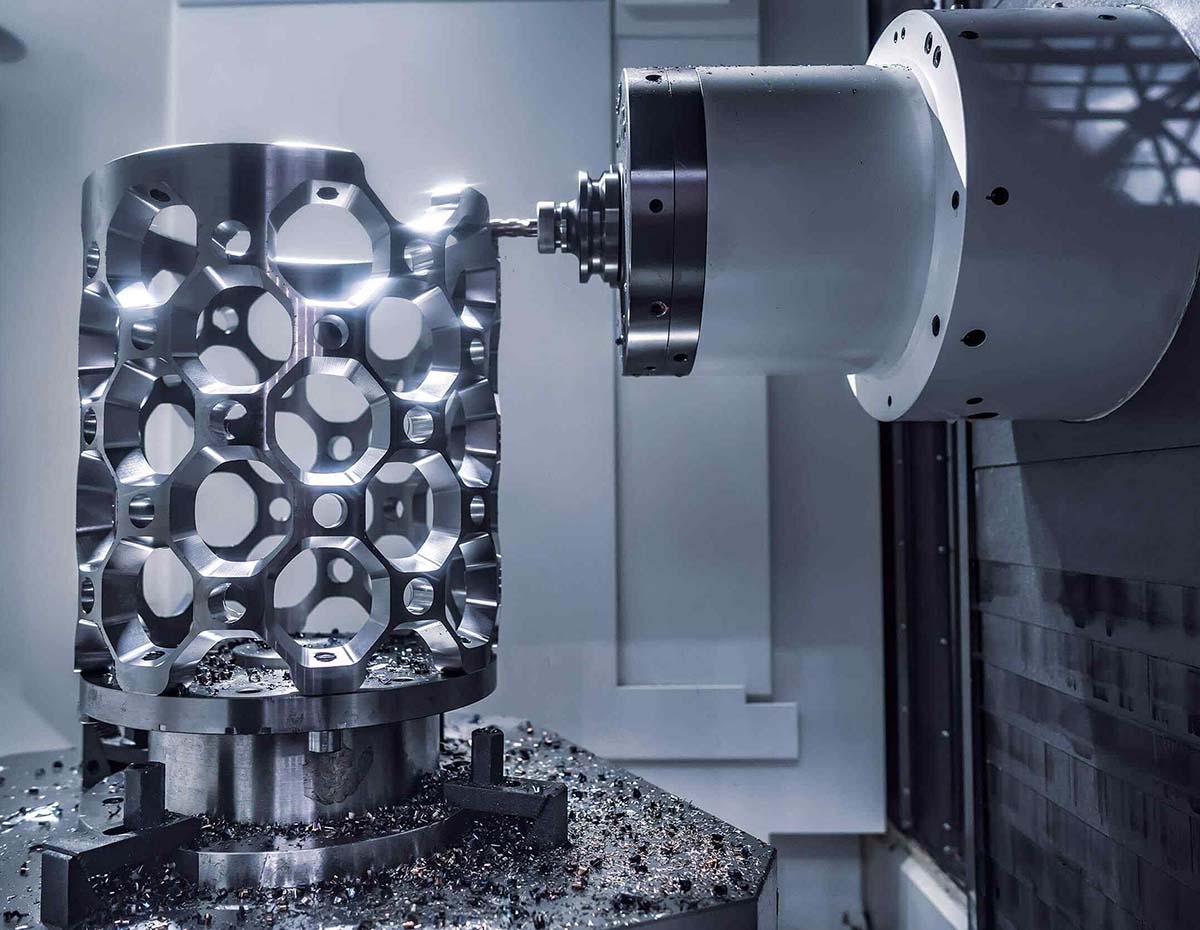
Understanding Hybrid Manufacturing
Hybrid Manufacturing refers to the integration of two or more manufacturing processes within a single manufacturing platform or tightly coupled production system.
The most common form combines:
- Additive Manufacturing (AM)
- Subtractive Manufacturing (SM)
within the same machine.
Researchers define hybrid manufacturing as a synergistic combination of additive and subtractive processes that creates capabilities beyond simple post-processing or sequential manufacturing.
For example:
- A metal component is partially built using Directed Energy Deposition (DED).
- CNC milling is performed directly on the deposited layer.
- Additional material is deposited.
- Further machining is applied.
This cycle continues until the final part is completed.
Unlike conventional workflows, the part remains in a single setup throughout the manufacturing process.
Understanding Multi-Process Manufacturing
Multi-Process Manufacturing involves using different manufacturing technologies sequentially across multiple production stages.
A typical workflow may include:
- CNC machining
- Heat treatment
- Grinding
- Surface coating
- Final inspection
Each process is performed on separate equipment and often at different workstations.
This approach has been the foundation of industrial manufacturing for decades.
Examples include:
Aerospace Components
- Forging
- CNC machining
- Heat treatment
- Shot peening
- Surface finishing
Medical Devices
- Injection molding
- Laser cutting
- CNC machining
- Assembly
- Sterilization
Consumer Electronics
- Die casting
- Precision machining
- Anodizing
- Laser marking
- Automated assembly
Although these processes are interconnected, they remain physically separate.
Core Philosophical Difference
The key distinction lies in integration.
Hybrid Manufacturing
Focuses on process integration.
Multiple manufacturing methods operate within a unified system.
Multi-Process Manufacturing
Focuses on process orchestration.
Multiple manufacturing methods operate as separate production steps.
In simple terms:
Hybrid Manufacturing integrates processes.
Multi-Process Manufacturing coordinates processes.
This distinction significantly impacts productivity, flexibility, and production economics.
Technology Architecture Comparison
Hybrid Manufacturing Architecture
Typical configuration:
- Additive manufacturing module
- CNC machining module
- Shared workholding system
- Common control software
- Integrated process planning
Research shows that hybrid manufacturing systems are increasingly built around shared platforms capable of alternating between deposition and machining operations.
Advantages include:
- Reduced setup changes
- Improved positional accuracy
- Lower handling requirements
- Real-time process correction
Multi-Process Manufacturing Architecture
Typical configuration:
- Multiple independent machines
- Material handling systems
- Inspection stations
- Separate process controls
Advantages include:
- Greater process specialization
- Easier scalability
- Lower equipment complexity
- Flexible supplier integration
However, each transfer introduces potential sources of variation and delay.
Precision and Quality Comparison
One of the primary arguments for Hybrid Manufacturing is improved dimensional accuracy.
Because the workpiece remains fixed in a single setup:
- Datum shifts are minimized
- Re-clamping errors are reduced
- Process alignment is improved
Studies of additive-subtractive hybrid systems indicate that in-situ machining significantly improves surface quality and dimensional control compared with standalone additive manufacturing.
By contrast, Multi-Process Manufacturing often requires:
- Multiple fixtures
- Repositioning operations
- Inter-process transportation
Each step introduces cumulative tolerance variation.
Nevertheless, advanced quality systems allow Multi-Process Manufacturing to achieve extremely high precision for mass production applications.
Production Efficiency
Hybrid Manufacturing
Advantages:
- Reduced setup time
- Fewer handling operations
- Shorter production chains
- Faster prototype iterations
Research suggests hybrid systems can reduce production lead times by eliminating unnecessary transportation and intermediate setups.
Challenges:
- Longer machine occupation time
- Higher machine complexity
- Complex process planning
Multi-Process Manufacturing
Advantages:
- Parallel production capability
- High throughput
- Better workload distribution
- Easier production scaling
Challenges:
- Increased logistics
- Additional setup requirements
- Longer process chains
For high-volume production environments, Multi-Process Manufacturing often remains more economical.
Cost Analysis
Capital Investment
Hybrid Manufacturing systems typically require:
- Advanced CNC systems
- Additive manufacturing modules
- Integrated control software
- Specialized process development
Initial investment is often significantly higher than conventional manufacturing cells.
Operational Costs
Hybrid Manufacturing may reduce:
- Labor costs
- Material handling costs
- Inspection costs
- Inventory costs
However, maintenance requirements are generally more complex.
Multi-Process Manufacturing Costs
Benefits include:
- Lower equipment specialization costs
- Easier maintenance
- Incremental capacity expansion
Many manufacturers prefer Multi-Process Manufacturing because existing equipment can be integrated without major capital investment.
Design Freedom
Design flexibility is one of the strongest arguments for Hybrid Manufacturing.
Hybrid systems combine:
- Complex geometric freedom of additive manufacturing
- Precision finishing of CNC machining
As a result, engineers can produce:
- Internal cooling channels
- Lattice structures
- Topology-optimized geometries
- Lightweight aerospace components
Research consistently highlights that hybrid AM/SM systems overcome many of the limitations associated with standalone additive or subtractive manufacturing.
Multi-Process Manufacturing remains effective for conventional geometries but may struggle with highly integrated structures.
Application Comparison
Aerospace Industry
Hybrid Manufacturing excels in:
- Titanium components
- Engine components
- Lightweight structures
- Repair and remanufacturing
Industry experts increasingly view the future of aerospace production as a combination of additive near-net-shape manufacturing followed by precision machining.
Medical Devices
Hybrid Manufacturing enables:
- Customized implants
- Patient-specific devices
- Complex porous structures
Automotive Industry
Multi-Process Manufacturing remains dominant due to:
- High production volumes
- Established supply chains
- Cost-sensitive production environments
Typical automotive workflows may involve casting, machining, coating, and assembly across specialized production lines.
Electronics Manufacturing
Multi-Process Manufacturing remains the preferred approach because:
- High throughput is essential
- Product geometries are relatively standardized
- Supply chains are highly optimized
Digital Manufacturing and Industry 4.0
The rise of Industry 4.0 is blurring the distinction between Hybrid and Multi-Process Manufacturing.
Technologies such as:
- Digital Twins
- Artificial Intelligence
- Machine Learning
- Process Monitoring
- Automated Inspection
are enabling tighter integration across manufacturing systems.
Recent research highlights the growing role of AI-assisted process planning and CAD-CAM integration for hybrid additive-subtractive manufacturing environments.
Future manufacturing systems may combine the advantages of both approaches through intelligent orchestration and autonomous process optimization.
Which Approach Is Better?
There is no universal winner.
The optimal approach depends on:
| Factor | Hybrid Manufacturing | Multi-Process Manufacturing |
|---|---|---|
| Product Complexity | Excellent | Good |
| Design Freedom | Excellent | Moderate |
| Initial Investment | High | Moderate |
| Production Volume | Low to Medium | Medium to High |
| Flexibility | High | Moderate |
| Scalability | Moderate | Excellent |
| Setup Reduction | Excellent | Limited |
| Throughput | Moderate | Excellent |
For highly customized, complex, high-value components, Hybrid Manufacturing often delivers superior performance.
For large-scale industrial production, Multi-Process Manufacturing remains the preferred solution due to scalability and cost efficiency.
The Future: Convergence Rather Than Competition
The debate between Hybrid Manufacturing and Multi-Process Manufacturing should not be viewed as a battle where one approach replaces the other.
Instead, the industry is moving toward convergence.
Modern factories increasingly combine:
- Additive manufacturing
- CNC machining
- Inspection systems
- Robotics
- Digital twins
- AI-driven process planning
into unified production ecosystems.
Researchers suggest that future manufacturing environments will rely on intelligent hybrid process planning capable of dynamically selecting additive and subtractive operations based on geometry, cost, and production requirements.
The result will not be purely Hybrid Manufacturing or purely Multi-Process Manufacturing.
It will be intelligent manufacturing.
Conclusion
Hybrid Manufacturing and Multi-Process Manufacturing represent two powerful strategies for addressing modern manufacturing challenges.
Hybrid Manufacturing integrates additive and subtractive technologies into unified systems that maximize design freedom, accuracy, and process efficiency.
Multi-Process Manufacturing leverages specialized production stages to achieve scalability, throughput, and cost efficiency.
Rather than competing approaches, they are complementary solutions optimized for different production objectives.
As Industry 4.0 technologies continue to mature, manufacturers that successfully combine the strengths of both approaches will be best positioned to produce complex, high-quality products with greater flexibility, efficiency, and innovation.
References
- Rabalo, M.A., Rubio, E.M., de Agustina, B., Camacho, A.M. Hybrid Additive and Subtractive Manufacturing: Evolution of the Concept and Last Trends in Research and Industry. Procedia CIRP, 2023. https://www.sciencedirect.com/science/article/pii/S2212827123003542
- Costa, A. et al. A Review of Hybrid Manufacturing: Integrating Subtractive and Additive Manufacturing. Materials, 2025. https://www.mdpi.com/1996-1944/18/18/4249
- Lauwers, B. et al. Hybrid Processes in Manufacturing. CIRP Annals, 2014. https://www.sciencedirect.com/science/article/pii/S0007850614001851
- Sebbe, N.P.V. et al. Hybrid Manufacturing Processes Used in the Production of Complex Parts: A Comprehensive Review. Metals, 2022. https://www.mdpi.com/2075-4701/12/11/1874
- Harabin, G.P., Behandish, M. Hybrid Manufacturing Process Planning for Arbitrary Part and Tool Shapes. https://arxiv.org/abs/2205.11805
- Khan, M.T. et al. Automatic Feature Recognition and Dimensional Attributes Extraction From CAD Models for Hybrid Additive-Subtractive Manufacturing. https://arxiv.org/abs/2408.06891
